HC-5404
HC-5404
HC-5404
Clinical Development of HC-5404
----------
Inhibition of PERK by HC-5404 results in significant antitumor efficacy as combination with varied standard of care anti-angiogenic agents in multiple solid tumor models, including renal cell carcinoma and gastric cancer.
HC-5404 recently completed investigation in a Phase 1a trial as a monotherapy for the treatment of advanced solid tumors enriched for patients with renal cell carcinoma (RCC) and gastric cancer. A Ph1b/2 study will be initiated for the combination HC-5404 in combination with a VEGFR TKI.
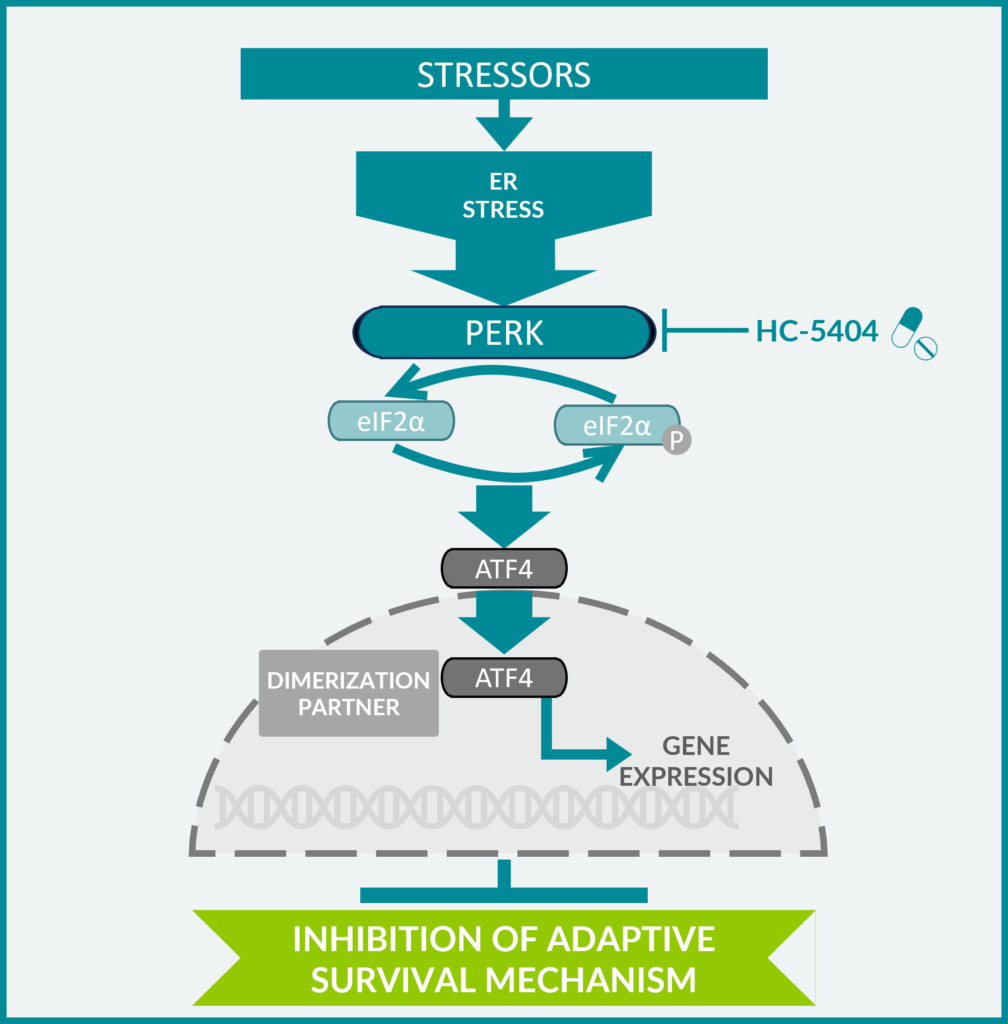
PERK and the Unfolded Protein Response
- The Unfolded Protein Response (UPR) is an adaptive cellular program used by cancer cells to survive by facilitating:
- Adaptation to harsh tumor microenvironment characterized by hypoxia, nutrient deprivation, oxidative stress
- Hypoxia drives accumulation of misfolded proteins in the endoplasmic reticulum (ER), leading to ER stress and activation of PERK (protein kinase R–like endoplasmic reticulum kinase) in the UPR pathway
- PERK is an ER-resident transmembrane kinase that signals through eIF2a to block ER-dependent protein synthesis and maintain homeostasis
- Various SOC cancer therapies (i.e. VEGFR TKIs) further amplify ‘stress’ in tumors and activate PERK as a survival mechanism
- HC-5404, a First-in-Human PERK inhibitor, has completed a Phase I clinical trial focused on solid tumors
- Inhibition of the adaptive UPR via PERK inhibition results in monotherapy and combinatorial anti-tumor activity with anti-angiogenics in multiple tumor types